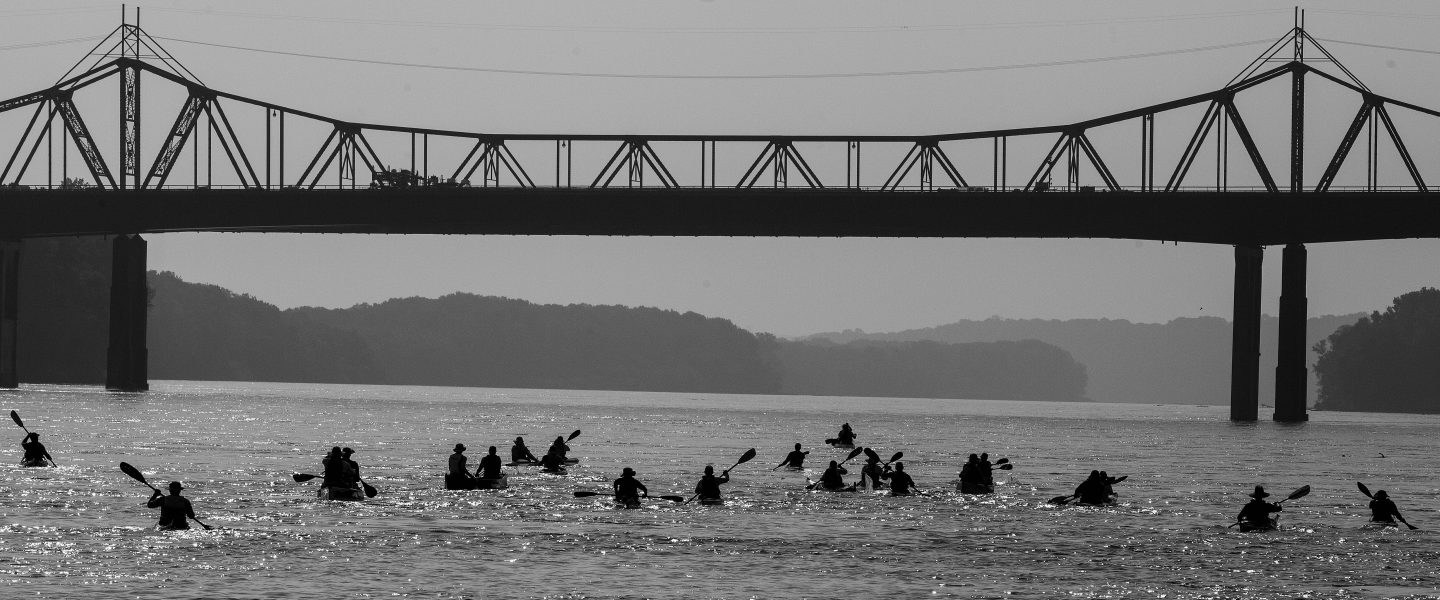

Since I made my plans for a 2019 descent of the Missour River public, I saw posts on Facebook from Peggy Hellandsaas at Tobacco Gardens Resort and Marina on Lake Sakakawea in North Dakota. In fact, I believe she might have been among the first few commenters on my original post announcing my trip. Lots of the posts were similar – waiting for you at Tobacco Gardens, can’t wait for your arrival at TG, etc. In my mind, that would be well into my trip so didn’t think much of it. I did communicate with Peggy to have one of my re-supply packages shipped there.
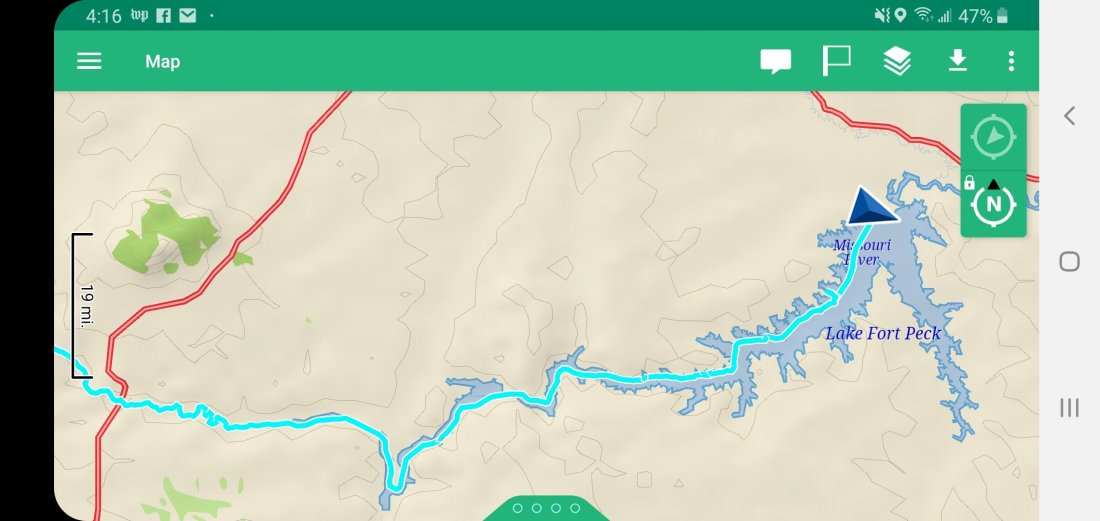
The past few weeks as I got closer, the messages continued, offering encouragement and best wishes. Peggy also ensured my chosen site to camp the night before arriving at TG was ideal – a completely empty American Legion park with water, shelter and a picnic table – a perfect spot compared to the miles of willows and swamps or the flooded and sketchy Williston, ND boat ramp prior to encountering the campground. I set out early from the American Legion park with the intent to paddle the nearly 27 miles to Tobacco Gardens – pretty much the first 27 miles of Lake Sakakawea.
Around 4pm, with about 3 miles left to get to the cove that contained Tobacco Gardens, I saw my first boat of the day. It veered towards me, cut its engines to idle and I heard an ‘Ahoy!’ Surprised, but then again not really, it was Peggy with a few friends and staff of Tobacco Gardens, welcoming me in. They offered to tow me the rest of the way, but I politely declined. Eventually I made the turn into the cove and paddled over to the marina, where I was met by Peggy and grandson Rowdy. She directed me to a spot to park my kayak, about 50ft from the front door of a tiny cabin that was to be my home for as long as I’d like. Rowdy was a huge help unpacking my gear and carrying it up to the cabin. After getting my bearings and changing into some not so funky clothes, I went over to the marina cafe, where Peggy had cold beer and great conversation waiting. We talked about my trip so far and paddlers who had enjoyed hospitality at TG in the past. She showed me a few paddles they had all signed as well as a guest book for more extended messages.
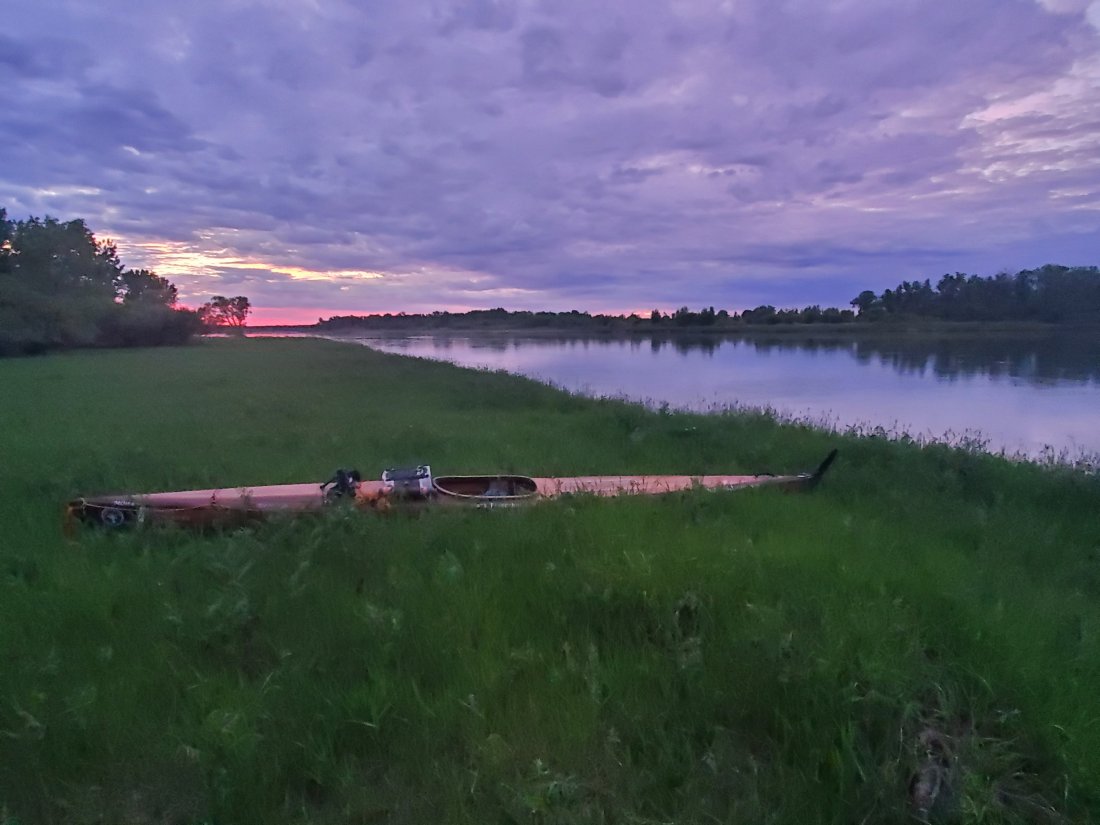
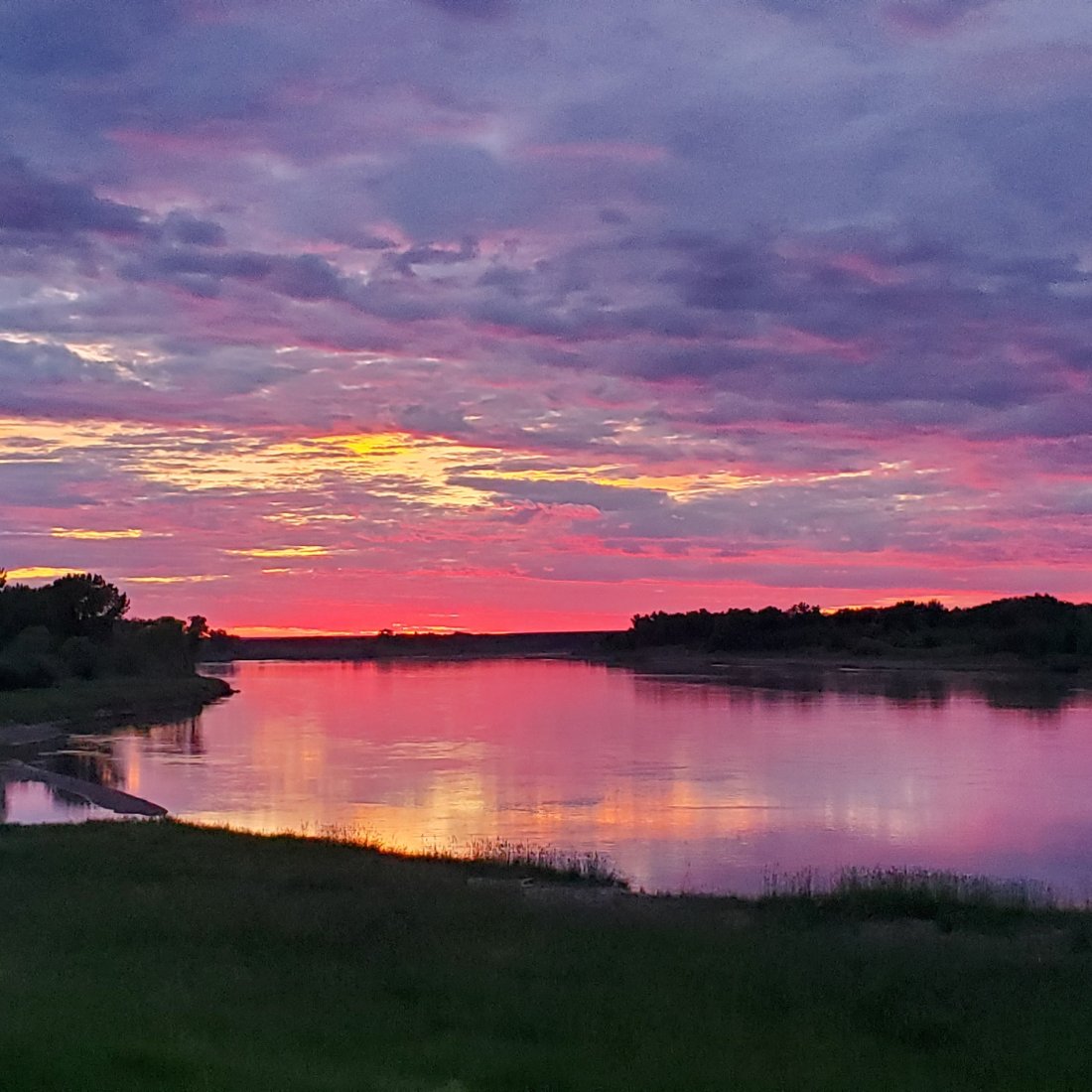
After a much needed quick shower, my first in about a week, I went back to the cafe, where Peggy had me sit with her daughter Jade, son-in-law Levi and their two daughters, where it was actually Jade’s birthday dinner! I was served ribs, salad, mac n cheese, fries, garlic bread and eventually an amazing ice cream dessert. I enjoyed conversation with Jade and Levi, learning quite a bit as they both work in the oil industry. After dinner, Peggy brought out a cooler filled with ice and beer, a pitcher of drinking water, then 3 MORE racks of ribs to eat the next day for lunch, as well as two massive rice krispy treats. I was also invited to raid the convenience store portion of the cafe for absolutely anything I needed. With lack of staff, the TG cafe was closed for food service Tuesday and Wednesday, the next two days I’d be there. With Peggy’s generosity, there was no chance of me going hungry, however. I enjoyed a relaxing evening watching the sunset over the lake from the porch of my cabin.
The next day was reserved for almost nothing but lounging and resting my body and mind. I dropped off some laundry with Peggy mid-morning, the fired up the grill at my cabin to reheat the ribs. Peggy also allowed me to fix up a huge salad to go along with it, as well as a steak for dinner. After that big lunch, naturally I took a nice two hour nap, the first time I’ve gotten to do that during my trip. My re-supply package arrived via UPS on schedule later that afternoon and I spent the evening unpacking and organizing all my gear, talking with my cousin Dave who is making the journey to visit me in a week, monitoring the arrival the next day of another friend, Dan. Peggy also took me and two other campers on a ride on her side-by-side: one of those all terrain, 4 person off-road vehicles. She took us to an amazing bluff overlooking the lake – a perfect view of the northern-most point the Missouri River system reaches – only 50 miles from Canada – as well as where Meriwether Lewis was accidentally shot by the poor visioned Cruzatte, another member of the expedition. She also took me on her nightly rounds through the camp – about 100 acres and 180 campsites which she alone manages with love, care, expertise and an iron fist when necessary. She told me about her interactions and experiences with the encroaching oil industry and how it affects her business and family – most of whom work in the industry.
Peggy told me that in the morning, when my friend arrived, we’d head over to the wagon train, and hop on a wagon for a ride from the countryside into the town of Watford City’s fairgrounds. I didn’t ask many details, just nodded that that sounded great and messaging Dan to whatever you do, make 100% sure you get here tomorrow in time for the wagon train.
Dan, a longtime friend from the local St. Louis hashers, arrived around 9:30 am, after an exhausting 2.5 day, 1000+ mile ride on his beautiful BMW touring motorcycle. He had a week to kill before starting a new IT contract job in Omaha, so decided to make the trip to visit me. A bit more about Dan – it was him who after a run and a few beers back in 2010, suggested I join our other friend Charlie on some crazy 340 paddle race on the Missouri River later in the summer. I said yes and 9 years later, the river journey of my life brought us together on the upper reaches of the river, getting ready to ride a wagon train through the prairies of North Dakota…
Peggy brought us to a farm where the wagon train had stopped for lunch, they had already travelled 10 or 15 miles that morning, with about 10 more to go to get to town. What is the wagon train, exactly and what was the occasion rather than a random June Wednesday? Well, it was about a dozen wagons or trailers pulled by teams of two or four horses – in fact we got to ride in the only wagon pulled by a team of four horses. We also had about 10 lone riders of the horses, there to guide the party, cut down any wire fences that got in our way, and to eventually block traffic once we got to town and crossed busy intersections. The occasion was the annual McKenzie County Fair, which started the next day. This was the annual wagon train that brought Fair participants – both human and equine – into Watford City for the festivities. Peggy of course packed us some snacks, drinks and beers to ensure maximum enjoyment and refreshment during the ride.
We hopped on Peggy’s friend Chris’ wagon and we took off at a horse-walking pace, through grasslands and cattle fields. We bounced along over rocks and ruts, holding on tight. Several times, Dan and I just looked at eachother and remarked at the randomness of us two St. Louis friends bouncing through the prairies of North Dakota on a wagon train on a breezy Wednesday afternoon. I’d been having feelings like this for the first 5 weeks of my trip already – how magical life can be and how one manages to find such rich but often random experiences when one sets out on a wild journey – but I was immensely satisfied to share this feeling for the first time with a good friend from home.
The wagon train route eventually made its way towards town, not before the odd contrast of travelling through a few ubiquitous oil drilling or pumping sites, as well as crossing over a pipeline that was under construction. We also passed by a field with 6 beautiful horses running free, who were wildly entertained by seeing teams of horses pulling wagons by their field. Peggy and Chris kept us entertained and informed throughout the ride, talking about local people, gossip, businesses, and how much crazy development has happened around Watford City during the oil boom. Eventually, we made our way into town, where traffic was stopped by the cow-people, phone pictures were snapped by delighted drivers and townspeople, and we passed into the Fairgrounds via the South gate.
After retrieving Peggy’s car, we helped her load 20 hay bales into her truck and brought them back to the fairgrounds to be used for competitions during the fair. She got us a few pizzas for our effort – the food I had been craving during my long days of paddling. Back at TG, Dan and I spent an evening enjoying pizza, beers and catching up on life, some Fireball and our own adventures.
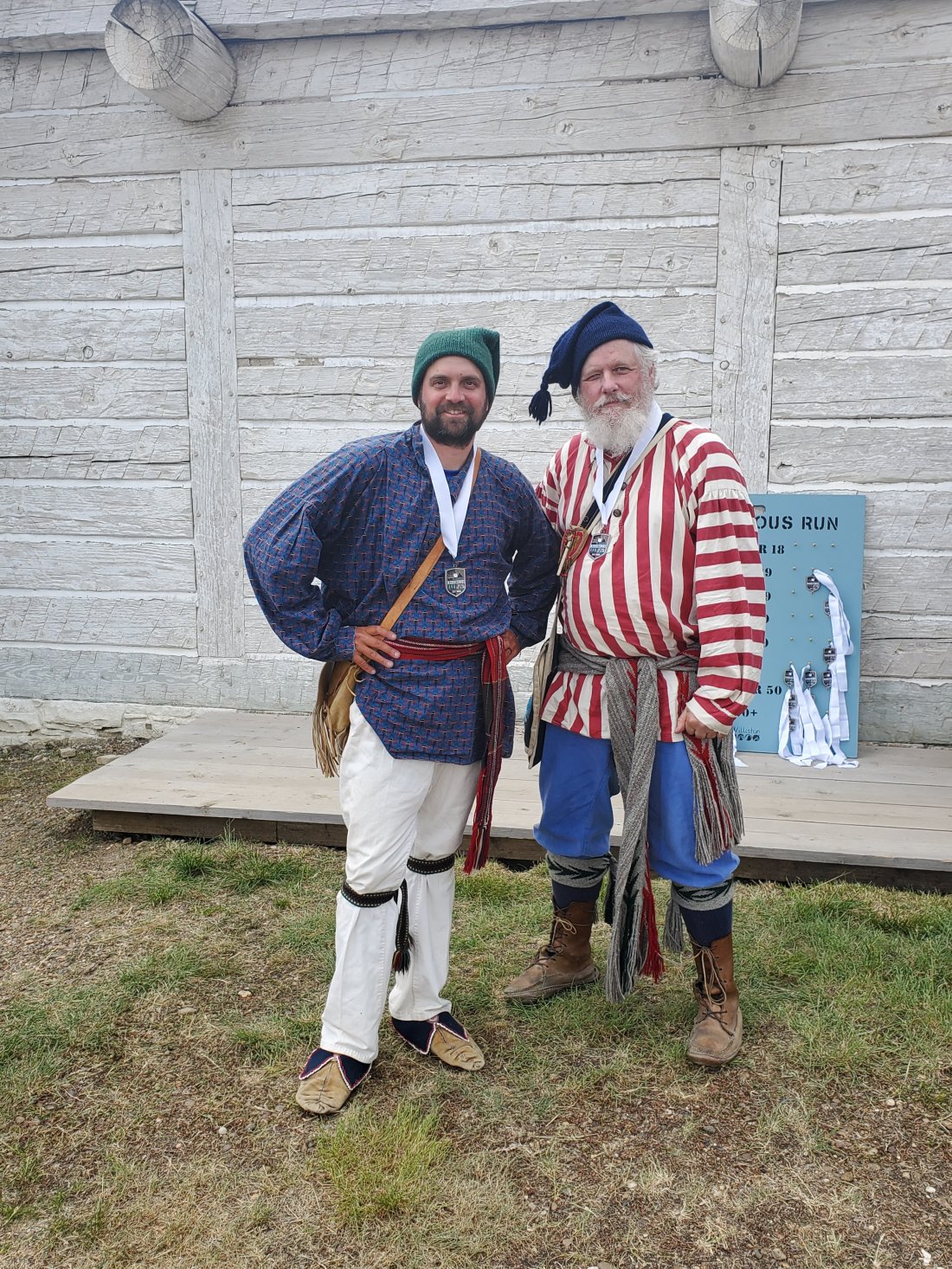
The next morning, I planned to depart. We were up early for me to pack the boat and Dan, his motorcycle, then enjoyed coffee and some breakfast at the Cafe. I signed Peggy’s paddle, adding my name to the list of the familiar and legendary names who’d passed this way before me, as well as wrote an extended message in Peggy’s book. We had time for a picture before I loaded up and hit the water:

For three days, Peggy was truly my river mother. She took care of absolutely everything I needed, and a lot of things I didn’t know I needed. She told me several times how much she enjoys taking care of paddlers who come through, knowing how hard we work and how hard our journies can be. The journey has at times been hard. The River Angels that I’ve encountered so far make that journey not easy, but manageable. Having a warm, cozy place to relax and recharge is the literal charging of the batteries of ones’ body to keep paddling and making miles.
Peggy, your unconditional love, care, and generosity is what recharges my spirit and my soul. It, or you, will never be forgotten. I enjoyed every second of my stay at Tobacco Gardens. You made me and Dan part of your family for a couple days and I’ll be forever grateful. You are a model for all other River Angels to aspire to. I can’t thank you enough for your kindness. I absolutely plan to make it back to TG sometime and highly recommend others to make the trip to this amazing little campsite and resort tucked into a lovely cove on Sakakawea.
mf






 mf
mf


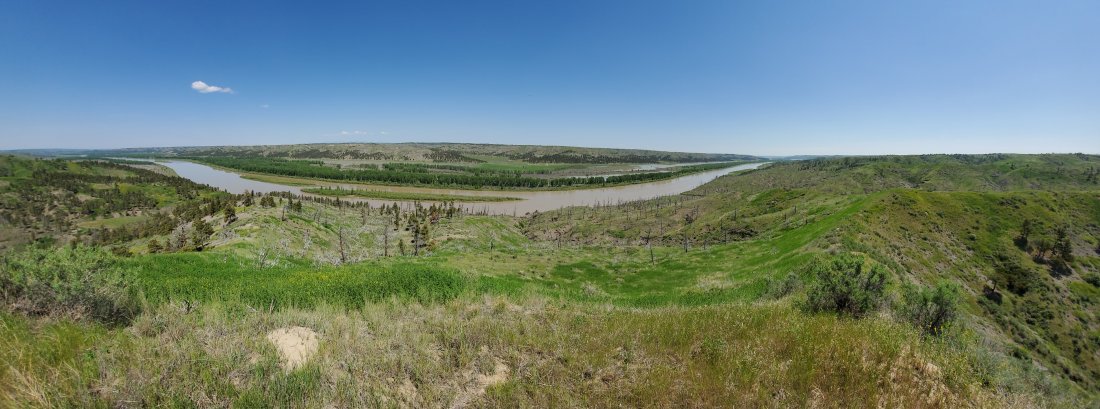
 I set my alarm for 5:15 but ended up not neding at as it starts to get light this far north before 5am. I jumped up, grabbed a Cliff Bar and water and climbed the hill. 1000 ft and a pit stop to take my morning constitutional is a self-dug hole later, I was standing at the exact spot where Meriwether beheld the snow-capped mountains that would later nearly put an end to their westward exploration. No mountains were to be seen today, I was told the day before that the increased haze was due to wild fires in Alberta, Canada.I took a few photos of the scene as the sun came up over the mountains. Pretty sure I’ll be framing this panorama:
 Later that morning, I stopped by a Homestead that wasn’t marked on the map. If it gets published when I have reception again, I had an Instagram post that gave a short explanation of Homesteads along this part of the river. Basically, in the mid to late 1800s, the US government basically gave away tracts of lands in order to get people out west, settle the land and, ahem – move Native Americans off the land. While some stuck it out and made a life on the wide open plains through farming or raising livestock, many others weren’t able to sustain a life with the harsh Montana weather and conditions. Some of these Homestead sites can be found along the river here. Some are actually still in use as working farms, many others are just ruins of the old farm sites. You are able to stop and walk around in them. Some of the images are pretty stark. As I explored a few on my own, I had feelings of insignificance and impermanence. Here were homes and workshops of people whose lives were here or 10, 20, 30 years. And then it was done. They moved on to something better, something easier. And here were the remains of their lives and their work for that period of time. Captured in history.


 Another site I passed later that day was the Nez Perce Trail. While it isn’t a specific site you can stop and take a picture of, the map I was following was marked where the trail paralleled the river and eventually crossed over and headed North. As the young US was expanding westward, the Nez Perce signed a treaty to move to 7.5 million acres of land in Montana and further to the Northwest. As the 7.5 million acres became 1 million, 300 men, women and children of the Nez Perce refused to sign a revised treaty and tried to make a run for the northern border of Canada. Pursued by US troops, they were eventually tracked down, some killed and the rest forced to reservations. As I paddled by where these 300 tribespeople marched along and over the Missouri River, I reflected on the dark parts of our nation’s history, the sacrifices and horrible incidents that happened during our nation’s rapid expansion. Certainly, I’m proud to call America home. But I feel like educating oneself about the horrific things that got us to where we are today are a necessary part of being American.
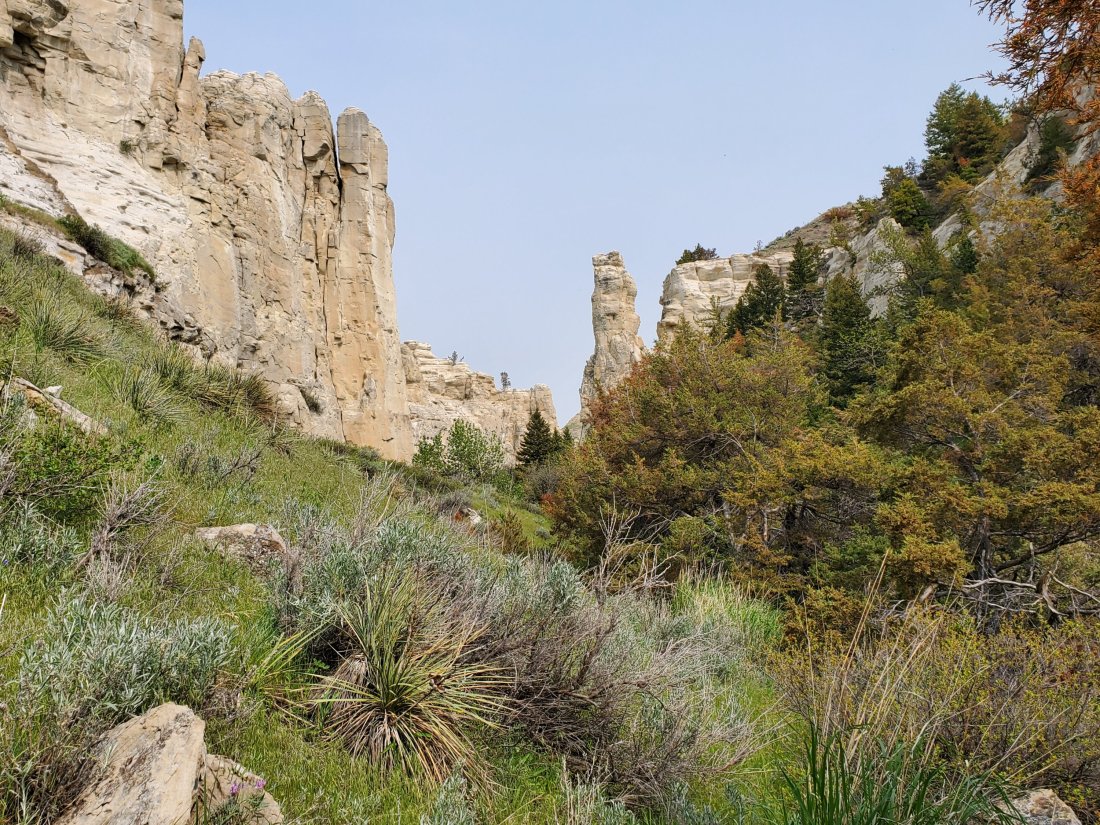
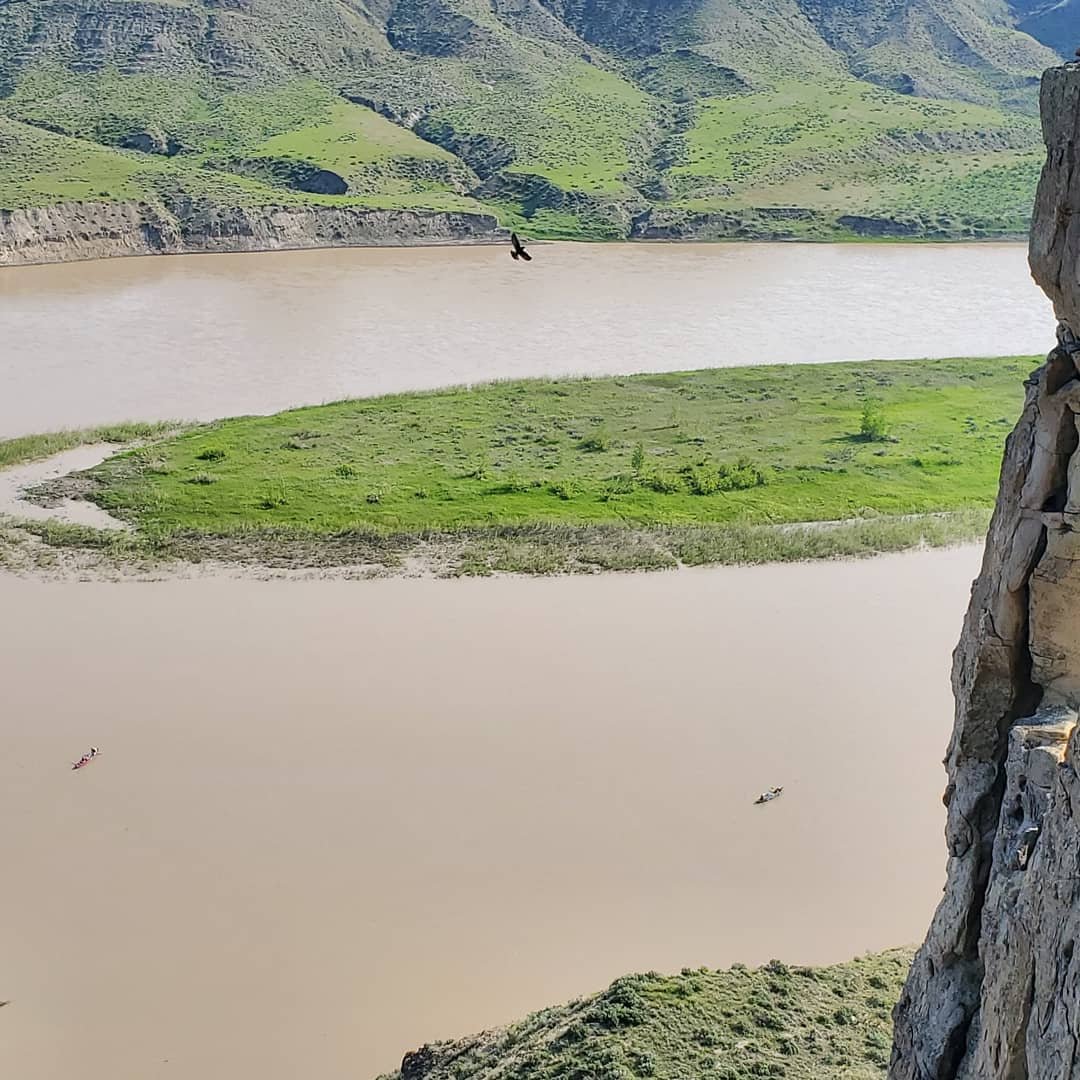 I played with the Go Pro while paddling the rest of the day. I did take another mid-day pit stop to hike back up into a couple more spectacular canyons.
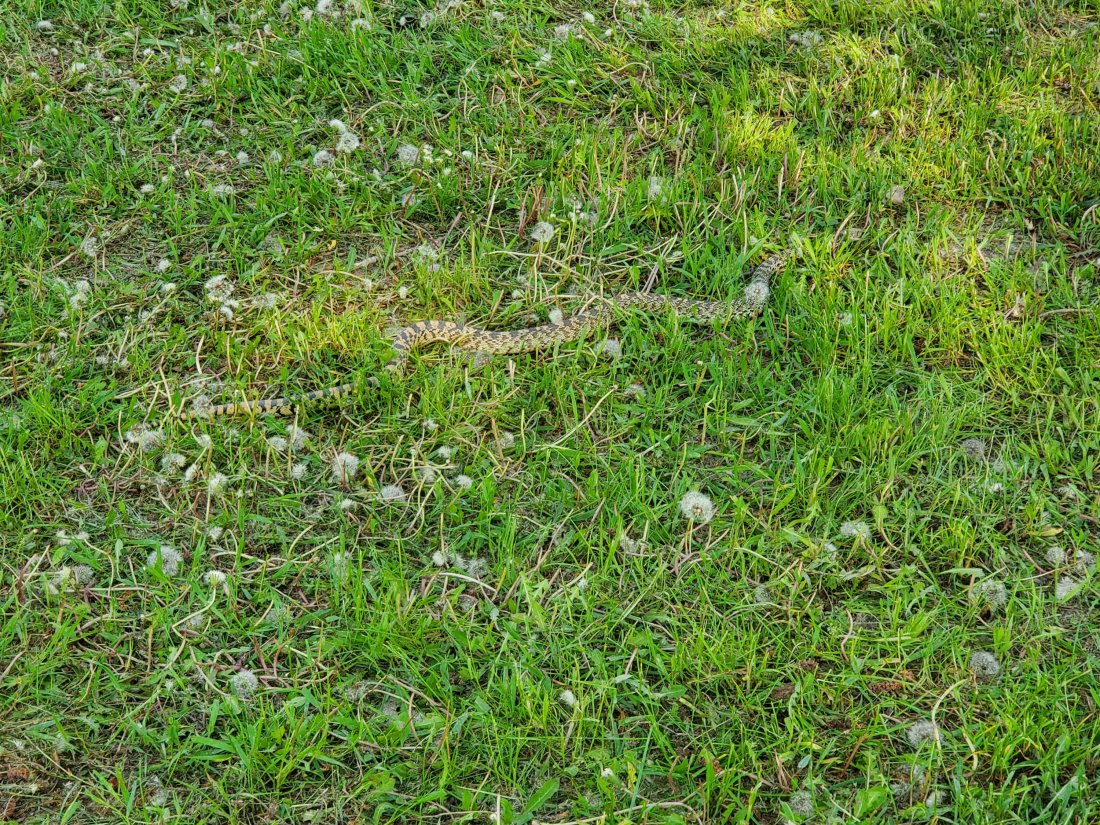
 As the day got later, I motored on to Judith Landing, encountering a completely emtpy campsite except for a big old snake – can anyone identify what this is? And should I be concerned about sharing a camp with him?
 As I mentioned, finding enough drinkable water is a challenge on this part of the river. A few campsites that would normally have water suffered damage during the abnormally cold and icy Montana winter and their water supplies are shut off. I topped of my approximately 7 gallons of cpacity at Fort Benton and have been trying to go slow. They say you should consume at least a gallon a day. Luckily, Norm put me in contact with an outfitter in Fort Benton, and she told me where I could find a secret stash of water here at Judith Landing. Sure enough, shortly after I arrived, I located the old cabin, then a really old, disconnected gas station ice machine behind the cabin, inside which I found about a dozen large casks of drinking water! Sweet relief! I wasn’t running low on my supply, but I got more confidence topping off my supply, not knowing when will be the next opportunity to re-supply.Also note that today was the first day (and probably pretty much every day after today) I immersed myself in the river after a long hot day of paddling. Sweeeeeeeeeeeeeeeeeeet Relief!
